Café vs. Restaurant: Interior Designers in Hyderabad

Interior Designer in Hyderabad
vsadmin
October 28, 2026
Walk into a café in Jubilee Hills and then into a family restaurant in Kukatpally. You feel the difference before you even see the menu. The lighting, the seating, the sound and the way the space flows all tell you what kind of visit this will be. None of it is accidental. It is planned.
If you are about to open a food business, knowing this difference early can save you from costly changes later.
Start With How Your Guests Use the Space
A café and a restaurant both serve food, but guests behave very differently in each.
In a café, people drop in for a quick coffee, a laptop session or a catch-up with a friend. They may stay for twenty minutes or three hours. In a restaurant, guests come for a meal. They sit, order, wait, eat and talk, and the visit has a clear beginning and end.
Good restaurant interior designers in Hyderabad start with these habits, not with colours or furniture. They ask who your guests are, how long they stay and how they should feel when they leave.
How a Café Space Is Shaped
A café should feel easy and welcoming. The design usually focuses on:
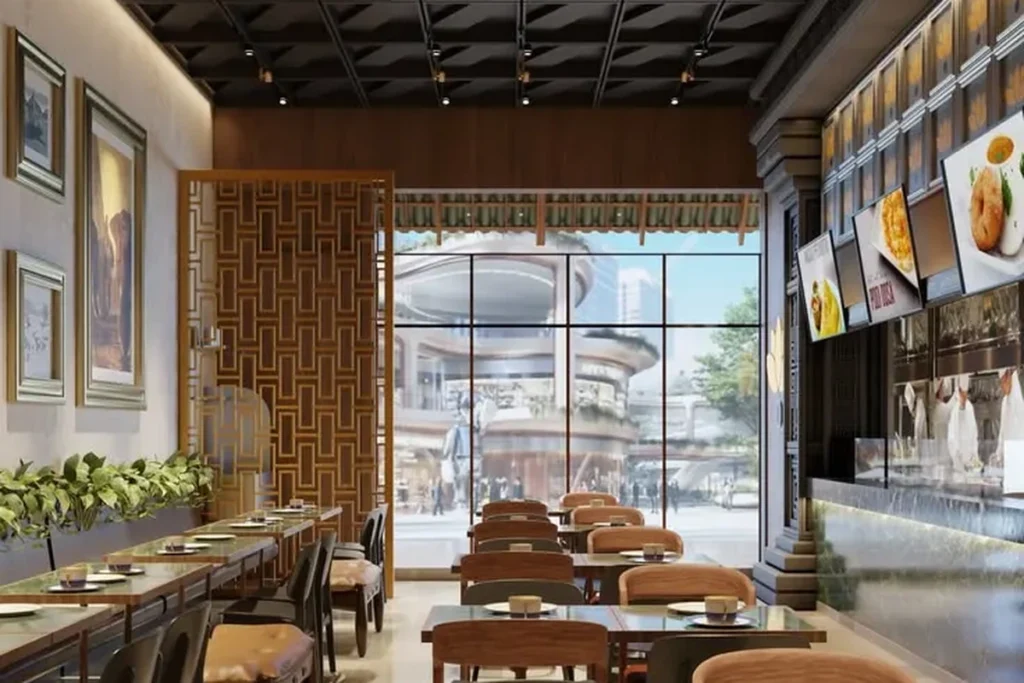
- Flexible seating. A mix of small tables, a long shared table and a window counter suits solo visitors, couples and small groups.
- Natural light. Daytime guests love bright corners. In Hyderabad’s strong afternoon sun, glass needs shades, plants or screens to stay comfortable.
- A visible counter. The coffee counter is the heart of a café. It should be seen from the door and be easy to reach.
- Comfort for long stays. Soft chairs, charging points and calm sound levels keep people sitting longer.
How a Restaurant Space Is Shaped
A restaurant is about the whole dining journey, from the entrance to the final bill. Designers look closely at:
- Layout and flow. Staff should move from kitchen to table without pushing through crowds. A clear path means faster service and fewer mistakes.
- Table planning. Hyderabad families often eat out in big groups. Tables that can be joined or separated help you serve a couple and a birthday party in the same evening.
- Layered lighting. Lunch needs brighter light, while dinner works better with warm, softer light. Dimmers make this simple.
- Kitchen choice. An open kitchen adds energy but brings noise and smell into the dining area. A closed kitchen keeps things quiet but hides the cooking. The right choice depends on your cuisine and your space.
- Waiting area and washrooms. These are often forgotten, yet guests remember them.
Hyderabad Adds Its Own Rules
Designing for this city is different from designing anywhere else.
Food is a big part of local life. Biryani, haleem, Irani chai and late-night dining mean busy weekends and long evenings, so seating and service paths must handle heavy crowds.
Strong cooking also means strong smells. Tandoors and masala-rich kitchens need proper exhaust and ventilation, or the aroma will follow guests home on their clothes.
Local characters can add warmth too. Soft touches such as jali patterns, arch shapes or Nizami-inspired colours can make a space feel rooted in the city without looking like a museum.
Location matters as well. A café near HITEC City or Gachibowli serves a working crowd that needs comfortable seating and quick service. A fine-dining restaurant in Banjara Hills or Jubilee Hills needs privacy, comfort and a calm mood. Experienced restaurant interior designers in Hyderabad plan for these differences from day one.
Common Mistakes New Owners Make
- Copying a photo from Pinterest without checking if it fits the actual floor plan.
- Packing in too many seats, which makes the space tight and tiring.
- Spending on décor first and thinking about ventilation later.
- Choosing materials that look good but are hard to clean every day.
Why Professional Help Matters
A restaurant or café is a business space, not just a pretty room. Every decision affects how fast your team works, how long guests stay and whether they return. This is why many owners bring in restaurant interior designers in Hyderabad before construction begins.
At Vamshi Shikha Design Studio LLP, we look at your menu, your target guests and your location before we draw a single line. We then plan the layout, lighting, furniture and finishes so the space looks good and also works hard for your business.
Our experience across homes and commercial spaces in Hyderabad, including areas like Tellapur and Kokapet, helps us understand how people actually use a space. You can see our approach to personal, made-to-fit design in our work on custom interiors in Hyderabad.
Ready to Plan Your Café or Restaurant?
Whether you want a cozy coffee corner or a full dining restaurant, the best time to talk to a designer is before construction begins. Early planning protects your budget and your opening date.
If you are searching for restaurant interior designers in Hyderabad who think about both design and business, get in touch with Vamshi Shikha Design Studio LLP. Share your idea, and we will help you turn it into a space guests love to return to.
About Vamshi Shikha Design Studio
We create thoughtfully designed interiors that bring together your lifestyle, personality, and the character of your space. From concept and space planning to materials, detailing, and execution, we shape interiors that feel refined, functional, and truly personal.
Frequently Asked Questions
A café is designed for short, flexible visits, so it needs easy seating, a visible counter and a relaxed mood. A restaurant is designed for a full meal, so it needs a clear dining flow, comfortable tables, and good planning between the kitchen and the guests.
Yes. Small spaces work well when the layout is planned carefully. A designer decides how many seats the space can hold comfortably, where the counter or kitchen should go, and how staff will move. Fewer, better-placed seats often feel better than a crowded room.
An open kitchen adds energy and lets guests see the cooking, but it also brings noise, heat and smell into the dining area. A closed kitchen keeps the dining space calm. The right choice depends on your cuisine, your space and the mood you want.
The cost depends on the size of the space, the kitchen setup, the furniture, the lighting and the finishes you choose. A designer can give you a clear estimate only after seeing your space and understanding your idea, so it is best to share your plan early.
Lighting sets the mood and affects how long guests stay. Brighter, natural light suits a daytime café. Warm, softer light suits a dinner restaurant. Layered lighting with dimmers lets you change the mood for lunch, evening and special events.
Before. Early planning helps you place the kitchen, seating, exhaust, power points and plumbing correctly the first time. Changing these after construction begins usually costs more time and money.
They plan exhaust and airflow around your kitchen from the start. This is especially important for tandoor and masala-heavy cooking, and for spaces with large glass fronts that gather heat in the afternoon. Good ventilation keeps guests comfortable and your staff working well.
Share your cuisine or menu idea, the kind of guests you want to attract, your location, the size of the space and your opening timeline. Photos of places you like are helpful too. These details help the designer plan a space that suits your business, not just a nice look.